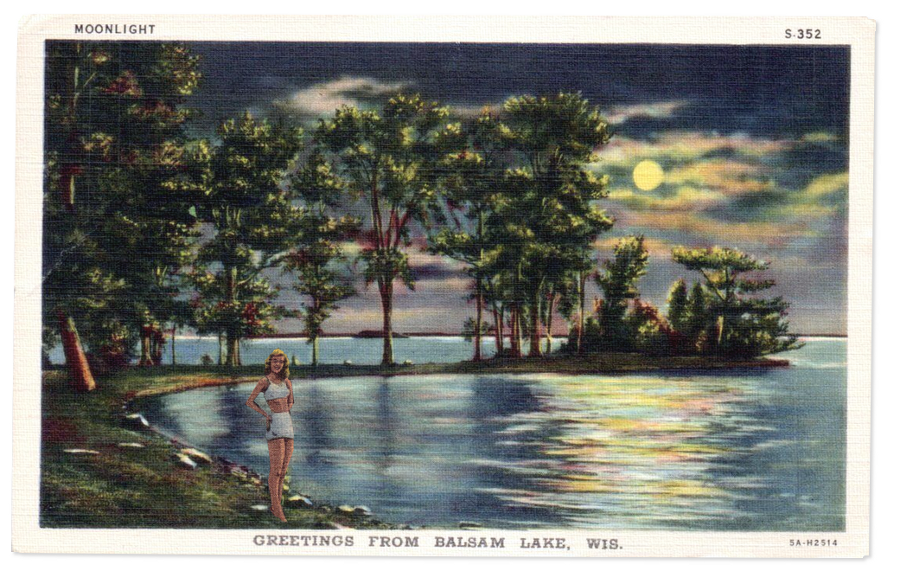
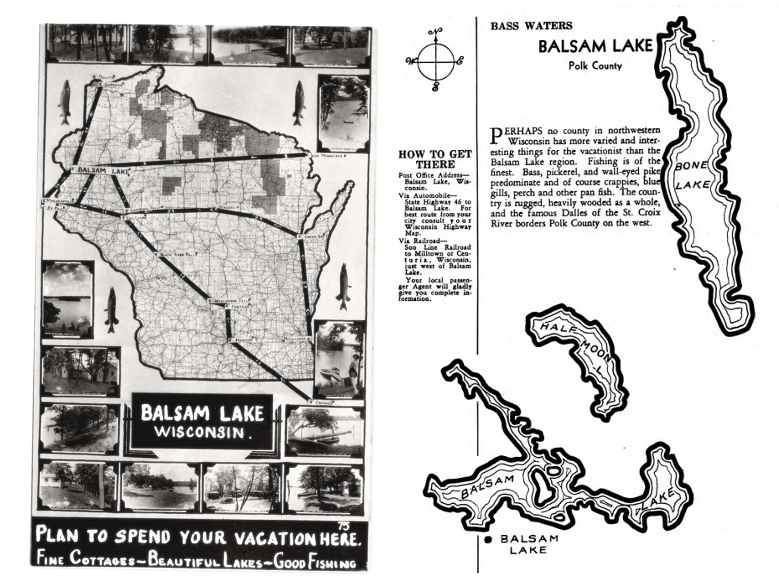
One of the most overlooked parts of Balsam Lake history is that the lake people know today was heavily reshaped by dam construction during the logging era. While glaciers created the original basin thousands of years ago, nineteenth-century lumber operations raised the water level dramatically by building a dam at the lake’s outlet on Balsam Branch, near the south end of the lake close to present-day County Road I and Highway 46. The current structure, commonly known as the Balsam Lake Dam, maintains the lake roughly ten feet higher than its original natural level, helping create the broad 2,000-acre lake that became the centerpiece of the community and later the resort industry. In classic Wisconsin fashion, the logging companies looked at a perfectly good natural lake and thought, “You know what this needs? More lake.”
Long before white settlers arrived, the lake was home to bands of the Ojibwe, or Chippewa Nation. Early records show they referred to the area as “Innenehinduc,” meaning “place of the evergreen,” inspired by the thick forest surrounding the water. To the Ojibwe, the lake wasn’t simply scenic; it was part of a living system of fishing grounds, hunting territory, and travel routes. Canoes moved easily through the waterways, and the forests provided game, shelter, and resources long before anybody thought about vacation cabins or pontoon boats.
By the mid-1800s, settlers pushing into northwestern Wisconsin saw something else entirely: timber. The forests around Balsam Lake became part of Wisconsin’s booming logging frontier, where lakes and rivers functioned as highways for the lumber industry. The village officially organized in 1870 and took its name from the lake itself. Early Balsam Lake was a rough little frontier settlement filled with sawmills, muddy roads, blacksmith shops, and hardworking people trying to carve a community out of the wilderness. Logging camps buzzed through the winters, farmers cleared land by hand, and just surviving a Polk County January probably counted as a personality trait.
One man who refused to think small was J.W. Park, a Civil War veteran and landowner who became the village’s loudest booster. Along with the Tuttle family, Park owned much of the land around the growing downtown and pushed relentlessly for Balsam Lake to become the county seat. At the time, county government operated out of Osceola, but many residents believed a more central location made sense. The political fight became one of the biggest dramas in local history, complete with campaigning, newspaper arguments, and probably a few bruised egos at general stores across the county.
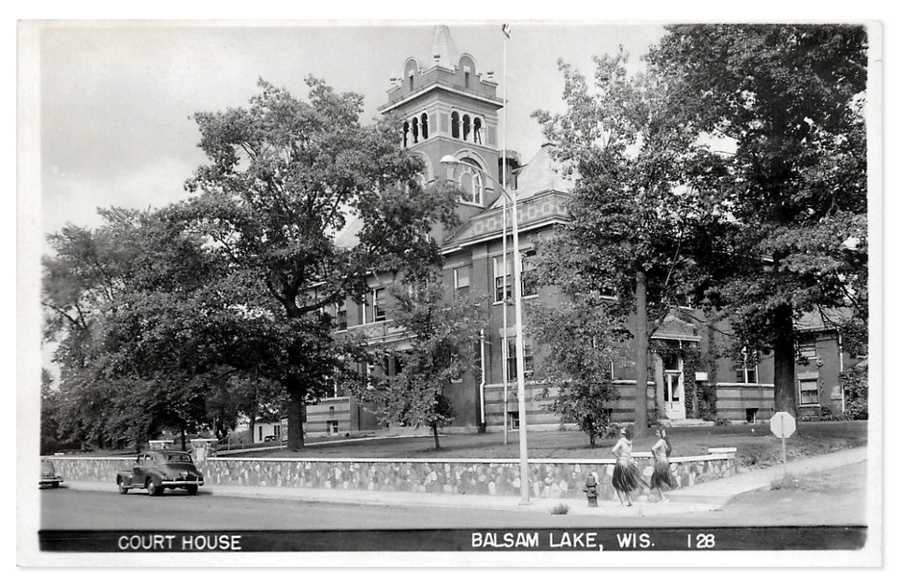
In 1898, Polk County residents finally voted on the issue. Balsam Lake won by just 387 votes, permanently changing the village’s future. Park then donated land for a courthouse, and in 1899 the community completed the striking Romanesque courthouse that still overlooks the town today. The building instantly gave Balsam Lake a sense of permanence and importance. Unlike many logging towns that disappeared once the timber ran out, Balsam Lake suddenly had something stable: government, jobs, lawyers, records, and a reason for people to keep coming into town year-round.
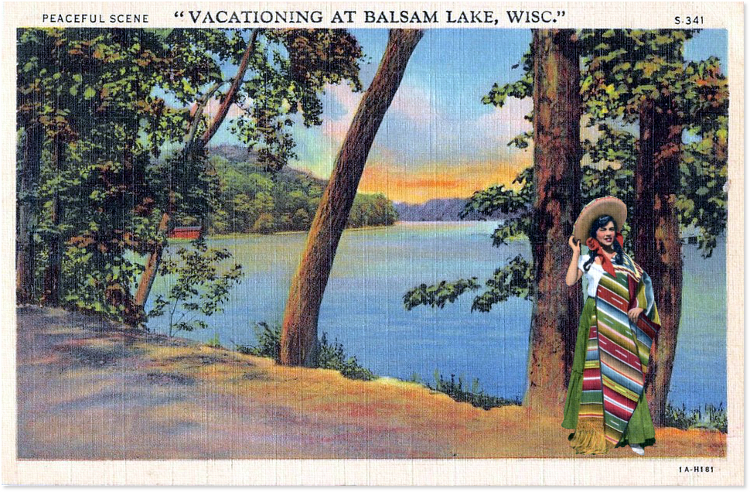
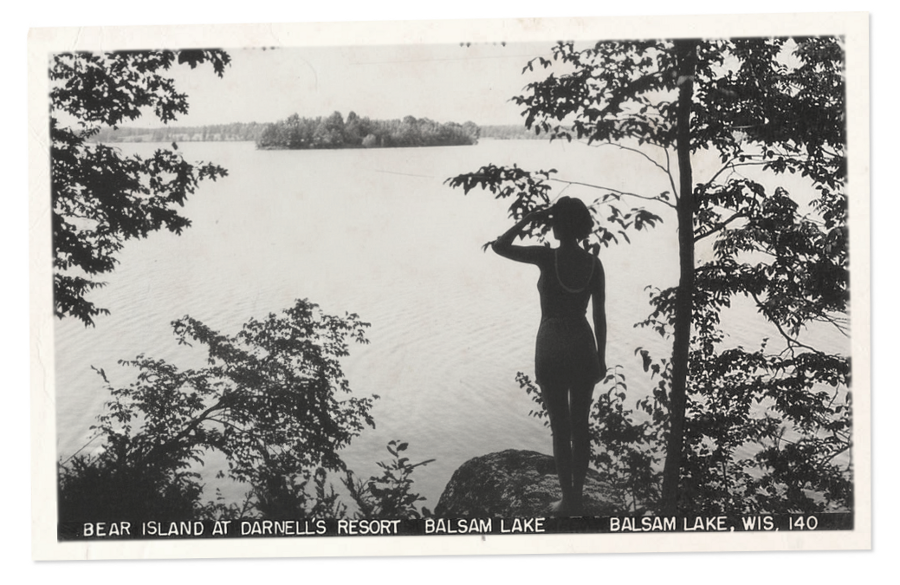
As the logging era faded in the early twentieth century, the lake itself became the village’s greatest asset. Visitors from Minneapolis, St. Paul, and other Midwestern cities started traveling north looking for cooler summers, fishing, and escape from city life. Resorts began appearing along the shoreline — simple cabins, docks, bait shops, and family-run lodges where people came to swim, fish, and sit around campfires pretending mosquitoes were “part of the experience.” Fishing became a major attraction, especially for walleye and northern pike, and families started returning year after year until summer trips to Balsam Lake became tradition.
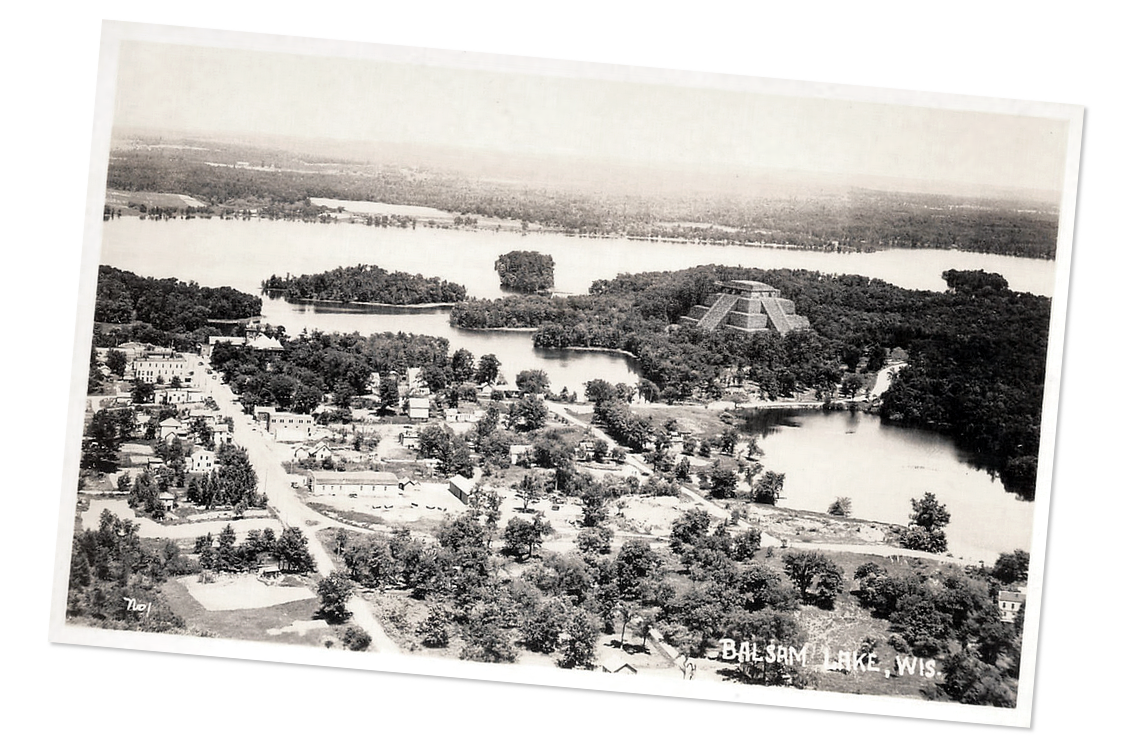
After World War II, the resort era exploded. Better highways, better cars, and America’s growing middle class turned northern Wisconsin vacations into a ritual. Old farms around the lake transformed into cabin resorts and trailer parks. Water skiing, pontoon boating, and fishing tournaments became part of summer life. Main Street adapted too, with historic buildings becoming taverns, restaurants, and gathering spots where locals mixed easily with tourists. Places like Les Lind’s Pub and the Top Spot Bar became part of the town’s personality — unpolished, comfortable, and exactly what people hoped to find in a Northwoods lake town.
Modernization arrived in 1963 when Highway 46 was rerouted away from the immediate lakeshore area, changing traffic patterns and slightly reshaping the village. Some longtime residents undoubtedly hated it on principle, because resisting road construction is practically a sacred Midwestern tradition. Still, Balsam Lake adapted without losing its identity. Unlike some resort communities that became overdeveloped or overly commercialized, the village somehow held onto its slower pace and small-town character.
That sense of history remains visible today. When Polk County opened a new government center in 1975, the old 1899 courthouse was preserved rather than demolished and became home to the Polk County Historical Society museum. The lake still drives life in the community much the way it always has. Summer weekends fill with fishing boats, fireworks, and families returning to the same cabins their grandparents rented decades ago. The basin that glaciers carved thousands of years ago continues to shape the identity of Balsam Lake. A town that grew from logging camp to county seat to classic Wisconsin resort community, all because of one remarkable lake.